Give our experts a call anytime at 615-488-3244
Knowing how to prepare your deck for staining is the most important part of the whole project. Skip this step and even a premium stain will peel, blotch, or fade well ahead of schedule.
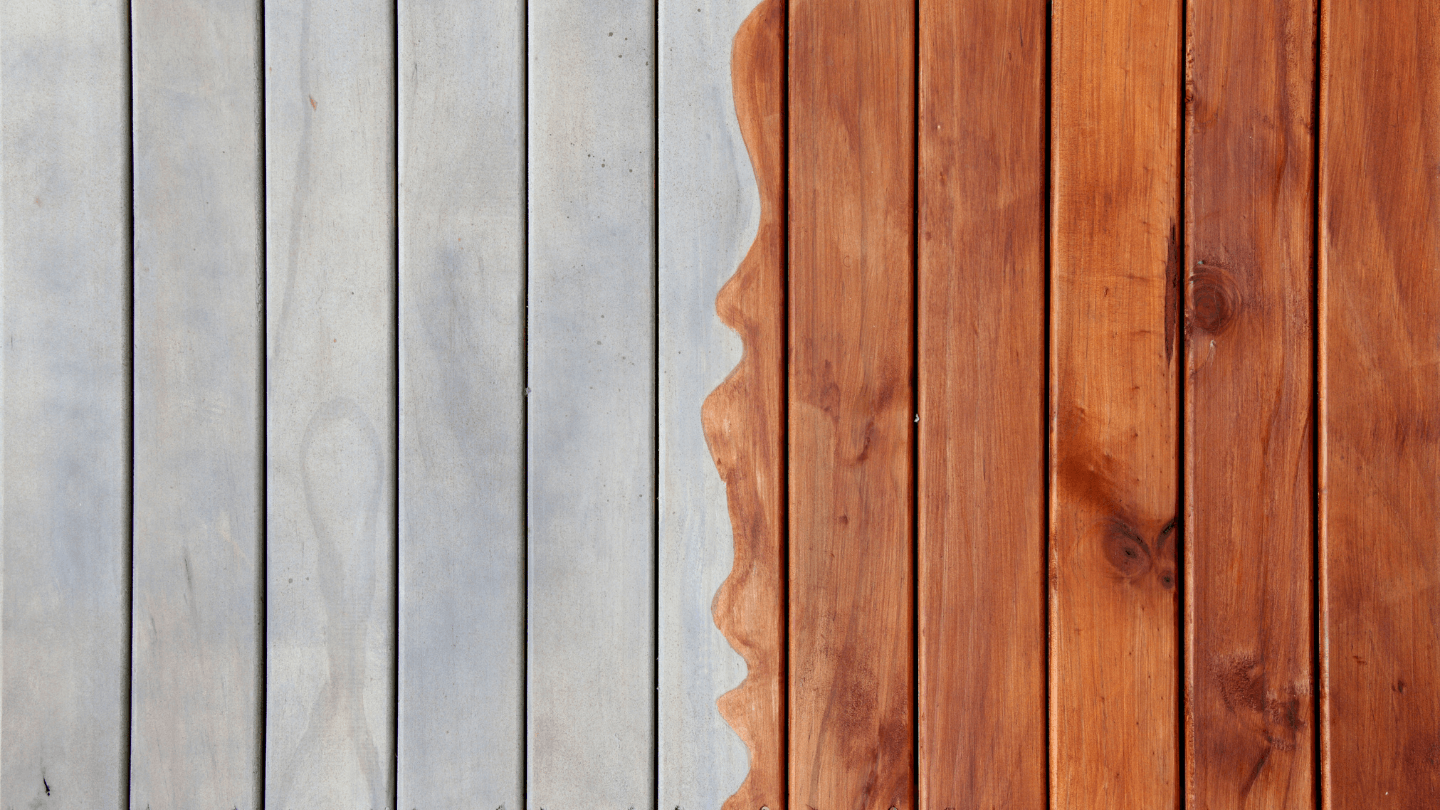
A lot of homeowners focus on the stain itself: the color, the brand, the sheen. Those choices matter, but they are secondary to what happens before the brush ever touches wood. Stain is a penetrating finish. It needs open wood pores to soak in and bond. When a deck surface is dirty, gray, or sealed with old finish, the new stain sits on top rather than penetrating the fibers, and that is when you see lap marks, flaking, and uneven absorption within a single season.
Tennessee adds its own layer of complexity. Middle Tennessee summers push heat and humidity to extremes. Wood expands and contracts constantly, and surfaces collect pollen, mold spores, algae, and tannin bleed from the wood itself. That biological buildup has to come off before staining. If you are planning a project this spring or fall, it helps to read our guide on the best time of year to stain your fence and deck in Middle Tennessee so your prep work and application window line up with good weather.
Proper prep also protects your investment. Decks exposed to UV radiation and seasonal moisture cycles break down faster than most homeowners expect. A clean, well-prepped surface lets the stain penetrate deeply and form a durable barrier against weathering. Done right, preparation is what separates a stain job that lasts from one that needs to be redone in a year or two.
Move all furniture, planters, grills, and rugs off the surface. You need full access to every board, including the edges where rails meet decking.
Walk every board and look for rot, loose fasteners, splintering, and raised nails. Make repairs before washing so you are not cleaning wood you will have to tear out anyway.
Washing removes dirt, mold, mildew, and gray oxidation. This step opens the wood grain so the stain can penetrate evenly instead of sitting on the surface.
If the existing finish is peeling, flaking, or failing in patches, a deck stripper will dissolve what remains. Trying to stain over a failing finish locks the problem in rather than fixing it.
Wood must reach an appropriate moisture level before staining. In Middle Tennessee humidity, this typically means waiting at least 48 to 72 hours after washing, sometimes longer after heavy rain.
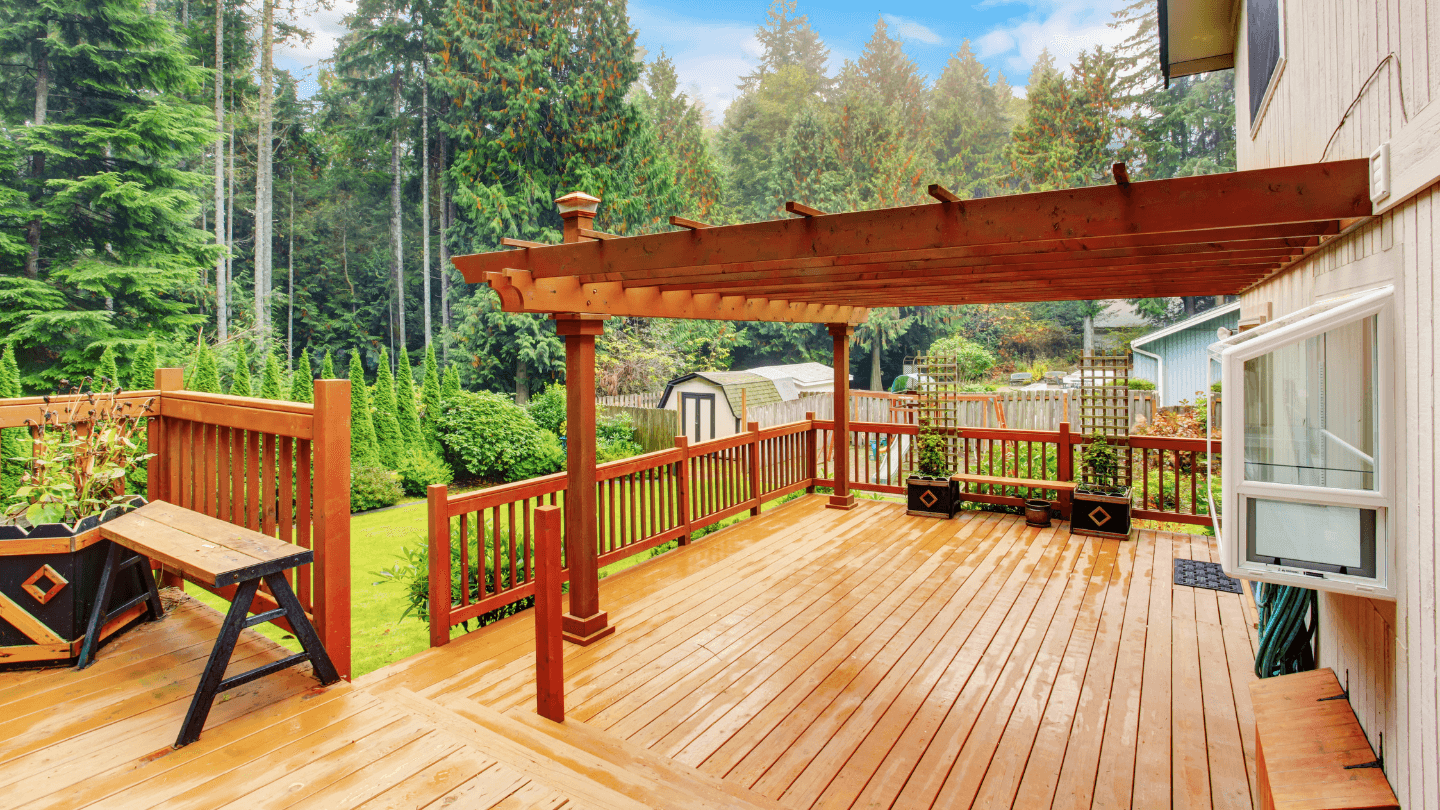
Cleaning is not just rinsing. A good clean removes three distinct problems: surface grime, biological growth like mold and algae, and gray oxidation caused by UV exposure. Each requires a slightly different approach. A deck brightener with oxalic acid neutralizes the gray color and opens the grain. A deck cleaner with sodium percarbonate lifts mold and mildew. Pressure washing removes the loosened material and rinses the surface clean. Using the right products in the right order makes the wood look closer to new and accept stain far more evenly.
Pressure washing technique matters a great deal. Too much pressure and you raise and fuzz the grain, which creates a rough surface that absorbs stain unevenly and can splinter. Use a wide fan tip rather than a pinpoint jet, keep the nozzle moving, and follow the grain of the wood. For most residential decks, moderate pressure is enough to do the job without damaging the fibers. If you have softer wood species common in older Tennessee homes, lower pressure with a good cleaning solution will outperform blasting at high PSI every time.
One mistake homeowners often make is skipping the brightener step after washing. Cleaning raises the wood pH and can leave it looking dull even after a rinse. Brightening restores the natural tone and balances the pH so the stain chemistry works as intended. It is a small step that has a visible impact on the finished color. Our post on common mistakes to avoid when staining your deck and fence goes into more detail on why this step gets skipped and what it costs you in the end result.
Stain covers color, not structural problems. Inspect every board at eye level so you can spot warping, cupping, or soft spots that indicate rot underneath. Press a screwdriver into any suspicious area. If it sinks without much resistance, that wood is compromised and needs to come out before the project continues. Staining over rot seals in moisture and accelerates the decay rather than stopping it.
Loose boards and protruding fasteners are safety issues as well as prep issues. Hammer down any raised nails and replace them with exterior-grade screws if the nails keep backing out, which is common in older decks where the wood has cycled through many seasons of moisture changes. Replace any boards that are cracked through, heavily splintered, or no longer structurally sound. A few replacement boards before staining is far less expensive than a full deck rebuild a few years from now.
Once repairs are complete, lightly sand rough areas to smooth the surface and feather any transition between old and new boards. Sand with the grain, not across it. This step is especially useful around replaced boards where the new wood sits slightly proud of the old surface. A consistent, smooth surface means the stain lays down evenly and the finished deck looks cohesive rather than patchy. If you are unsure whether your deck needs repairs or a full restoration before staining, our team offers free estimates and honest recommendations throughout Middle Tennessee.
Moisture is the single most common reason a good stain job fails early. Wood absorbs water during cleaning and needs time to release it before stain goes on. In Middle Tennessee, that process takes longer than in drier climates. Even when the surface looks dry and feels dry to the touch, the interior of the board can still hold enough moisture to prevent proper penetration. A simple moisture meter, available at any hardware store, takes the guesswork out of it. Most oil-based stains require wood moisture content below 15 percent. Water-based products may allow slightly higher moisture but still need a dry surface.
Timing your project around the weather matters just as much as waiting after washing. Staining when rain is in the forecast within 24 hours means the fresh stain may not have time to cure before moisture hits it. Staining in direct summer sun on a hot Tennessee afternoon causes the stain to dry faster than it can penetrate, which leads to lap marks and uneven sheen. Morning application on a mild, overcast day is often ideal. For a full breakdown of when conditions are favorable in Middle Tennessee, our guide on the best time to stain your fence and deck covers seasonal patterns in detail.
If you had a stretch of rainy weather leading up to your project, add extra drying time beyond the 48-to-72-hour baseline. Wood that sat saturated for several days before you cleaned it will take longer to dry than wood that was simply dusty. Patience here pays off in a stain job that lasts years rather than months. Rushing moisture is the one mistake that professional staining crews almost never make, because they have seen the results too many times.
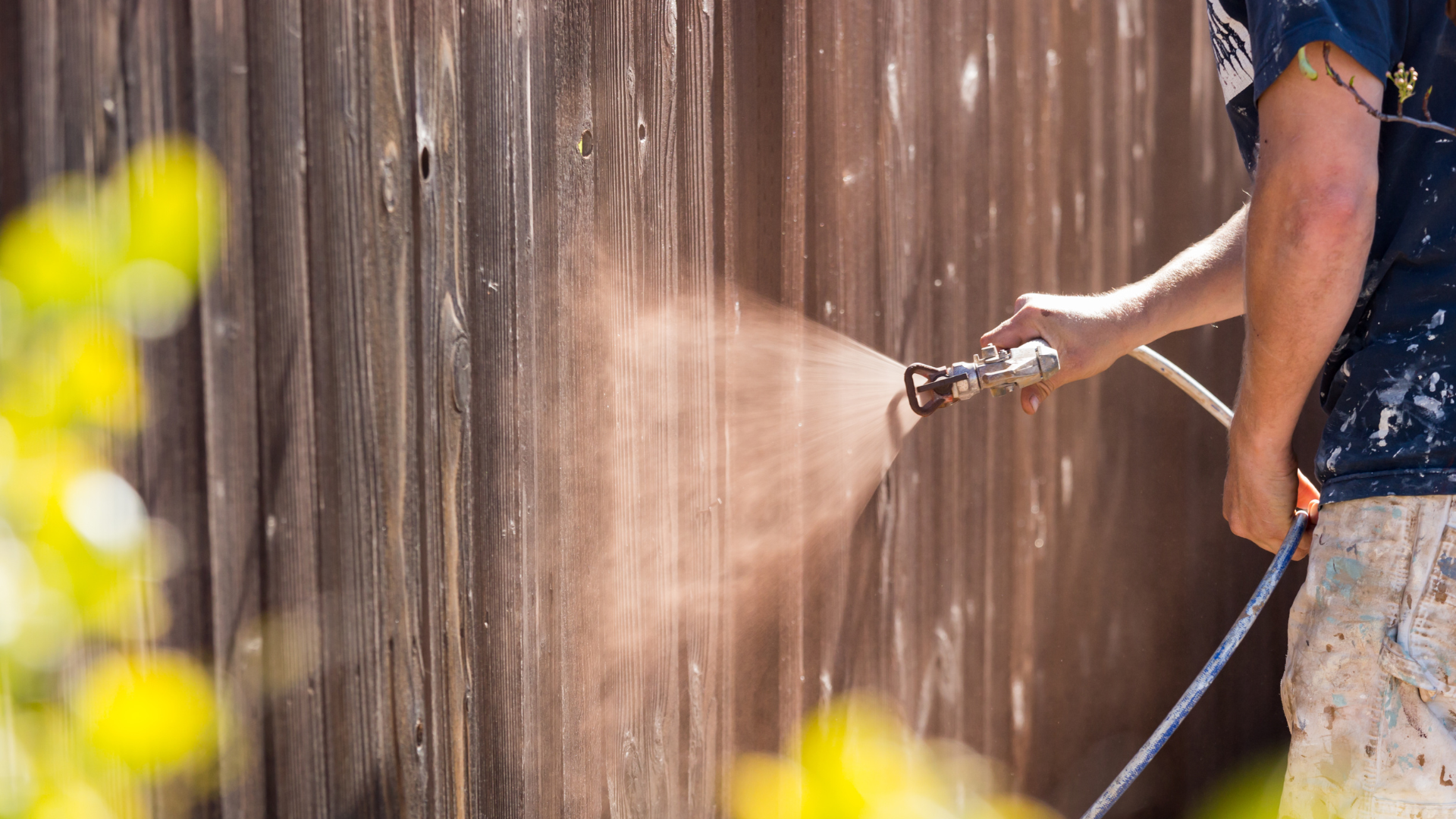
This question comes up on almost every restoration project, and the honest answer is: it depends on the condition of the existing finish. If the old stain is still bonding well, has not peeled, and is simply faded or dull, a compatible new coat can often go over it after a good cleaning and light sanding. The key word is compatible. An oil-based stain over a water-based product, or a solid-color stain over a semi-transparent one, creates adhesion problems. Know what is currently on the deck before you select a new product.
If the existing stain is peeling, flaking, or failing in patches, stripping is not optional. Partial adhesion means the new coat will fail in the same spots and often faster, because the failed areas act as entry points for moisture. A chemical deck stripper loosens and lifts the failing finish so it can be scrubbed or pressure-washed away. Follow up with a brightener to neutralize the stripper chemistry and condition the wood. This adds time and cost to the project, but it is the only way to achieve a result that holds. Our team works with homeowners in Murfreesboro, Brentwood, and across Middle Tennessee who have inherited decks with multiple failing layers, and getting back to bare, clean wood is always the right starting point.
Deciding whether to strip, clean and recoat, or fully restore is one of the areas where professional experience saves homeowners real money. An honest assessment up front prevents a second project 12 months later. If you are weighing doing this yourself versus hiring a professional crew, our post on DIY versus professional fence and deck staining lays out the trade-offs clearly so you can make the right call for your situation.
Once the deck is clean, dry, and repaired, the stain selection becomes a straightforward decision. The main variables are opacity level and base type. Semi-transparent stains show the natural wood grain and work well on newer or well-maintained wood in good condition. Semi-solid and solid-color stains hide more of the grain and are better suited to older wood with surface inconsistencies or previous stain history. At Mid TN Staining, we use professional-grade stain products selected for the specific wood species and condition of each project, not just whatever is on the shelf.
Color is another practical decision beyond personal preference. Darker stains absorb more heat, which can be a consideration on a south-facing deck in a Tennessee summer. Lighter tones reflect more light but may show dirt more readily. Our guide on how to choose the best stain color for your fence and deck walks through the considerations in detail and helps you think through the decision before you commit to a product.
If your project includes a fence as well as the deck, the prep process is similar but with a few differences in application technique and product selection. You can read more about our approach to fence staining in Nashville and across Middle Tennessee. We also serve homeowners throughout the region, including in Franklin, Mt. Juliet, La Vergne, Smyrna, and Lebanon for wood staining and restoration projects of all sizes.
For most residential decks, preparation including cleaning, brightening, and drying takes two to four days from start to finish. The cleaning itself may take a few hours, but the drying period in Middle Tennessee humidity often requires 48 to 72 hours minimum before the wood is ready to accept stain.
Light sanding is recommended in specific situations, not as a universal rule. If you have rough or fuzzy grain after pressure washing, splinters around repaired areas, or transitions between old and new boards, sanding those spots smooths the surface and helps the stain absorb evenly. A full sanding of the entire deck is usually unnecessary if the wood is in reasonable condition.
No. The wood needs to be fully dry before stain goes on. After rain, allow at least 48 to 72 hours of dry weather before applying any stain product. In Middle Tennessee, where humidity stays elevated even after the rain stops, using a moisture meter to confirm the wood is below the stain manufacturer's recommended moisture threshold is the most reliable approach.
Staining over a dirty or gray deck traps the contamination under the finish and prevents proper penetration. The stain will absorb unevenly, appear blotchy, and begin failing much sooner than it should. Dirt, mold, and oxidation act as a barrier between the stain and the wood fiber, so cleaning is not optional if you want lasting results.
Either approach can work, depending on the deck's condition, your available time, and your comfort with the process. Preparation is the most labor-intensive part of any staining project, and mistakes at this stage are the leading cause of early stain failure. If your deck has rot, multiple layers of old finish, or significant weathering damage, professional prep and staining is often the more cost-effective choice over time. Our post on DIY versus professional staining covers the decision in more detail.
Yes. Mid TN Staining handles the full preparation process, including cleaning, brightening, minor repairs assessment, and drying verification, as part of our deck staining service. We serve homeowners and property managers throughout Middle Tennessee including Murfreesboro, Nashville, Franklin, Brentwood, Smyrna, and surrounding communities. Contact us for a free estimate.
Ready to get started? Talk to the Mid TN Staining team.


615-488-3244
629-201-2240
Copyright © 2024 Fence and Deck Staining. All Rights Reserved